There is a word at the front of Nonviolent Communication that most of us hurry past. We fall in love with the second half: the communication, the four steps, the empathy, the elegant grammar of observations and feelings and needs and requests. The first word we treat as a label, or even an inconvenience. Many trainers have wished aloud for a different name. Marshall Rosenberg kept it anyway.
I want to suggest that he kept it because the first word is the deepest one. It carries a teaching that is thousands of years old, and if we receive it fully, it changes what we think we are doing every time we practice.
A recognition, not a rule
The word behind “nonviolent” is Ahimsa. It is perhaps the oldest and most central ethical teaching in the Indian traditions. It was the first principle of yoga, named by Patanjali before any posture or breath. It was what led Gandhi to face an empire with open hands and an undefended heart and ask it to leave.
And here is what is almost always missed about it. Ahimsa is not a rule. Rules can be followed mechanically, without understanding. You can white-knuckle your way through a conflict, saying all the right words, radiating contempt. That is rule-following. It is not Ahimsa.
What Ahimsa points to is a recognition: the direct, lived knowing that what moves in you and what moves in the person facing you is the same life. Not similar life. The same life. When this is genuinely felt, rather than merely agreed with intellectually, something remarkable happens. Harming the other person becomes not wrong but impossible to want. As impossible as wanting to harm your own hand.
Ahimsa, in its deepest form, is not the absence of violence. It is the presence of something that violence cannot coexist with.
Violence as forgetting
If life is one, then what is violence? The traditions give an answer of startling compassion: violence is a forgetting. It is life hurting itself in the dark, not knowing that the one it strikes is itself.
Marshall said the same thing in his own language. All violence, he taught, is the tragic expression of an unmet need. Sit with the word tragic. He did not say evil. He did not say inexcusable. He said tragic, because in the moment we lash out, we are longing for something deeply human, and the lashing out takes us further from it. The attack is a need that forgot its own name.
This applies to far more than physical violence. There is the violence of words. The violence of judgment. The quiet violence of the contempt we offer someone in the privacy of our own minds. Every enemy image we construct, every “those people,” every silent verdict is the same forgetting, at a smaller scale. We stop seeing a living human being, made of the same needs as ourselves, and start seeing a character in our story.
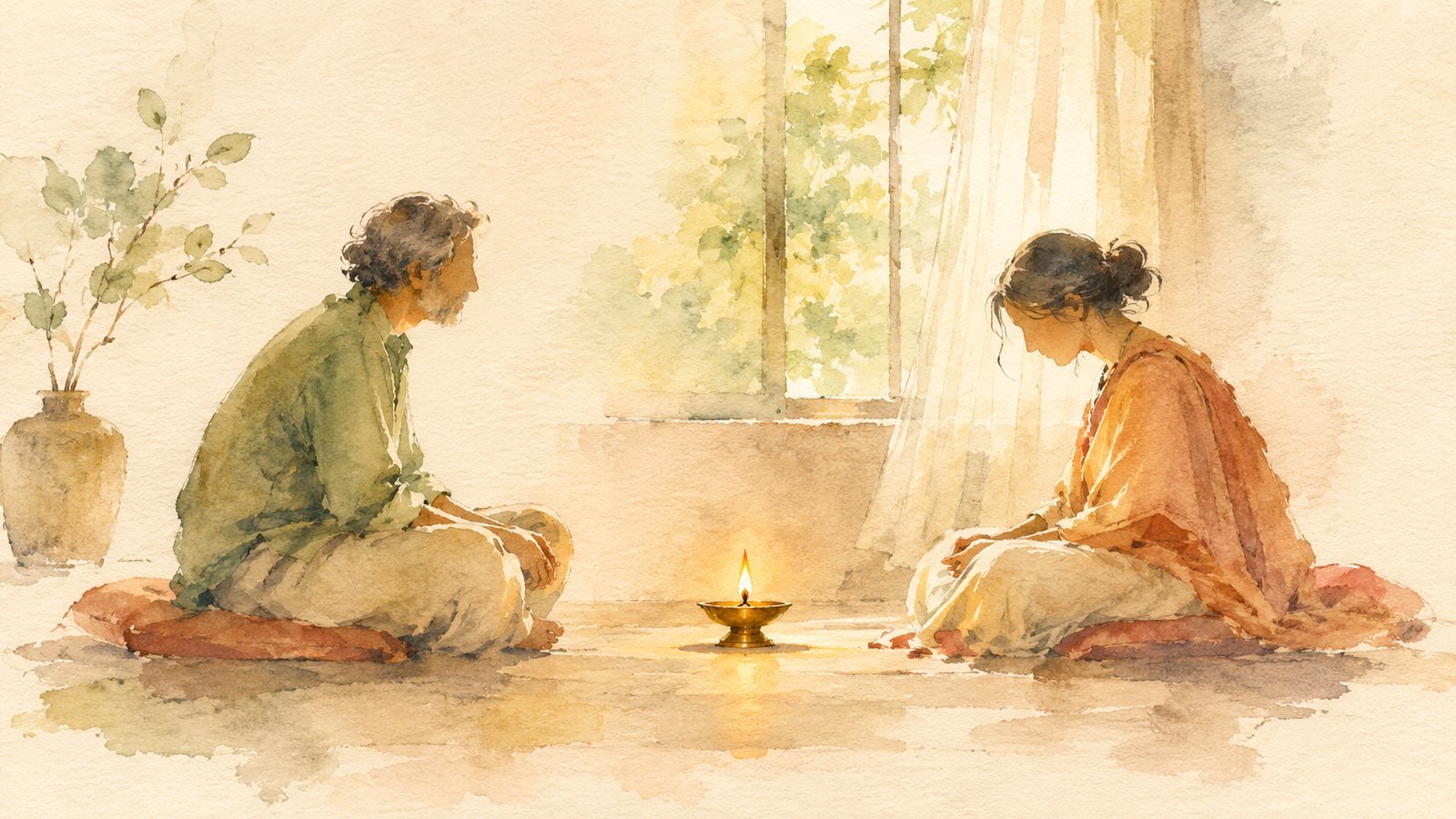
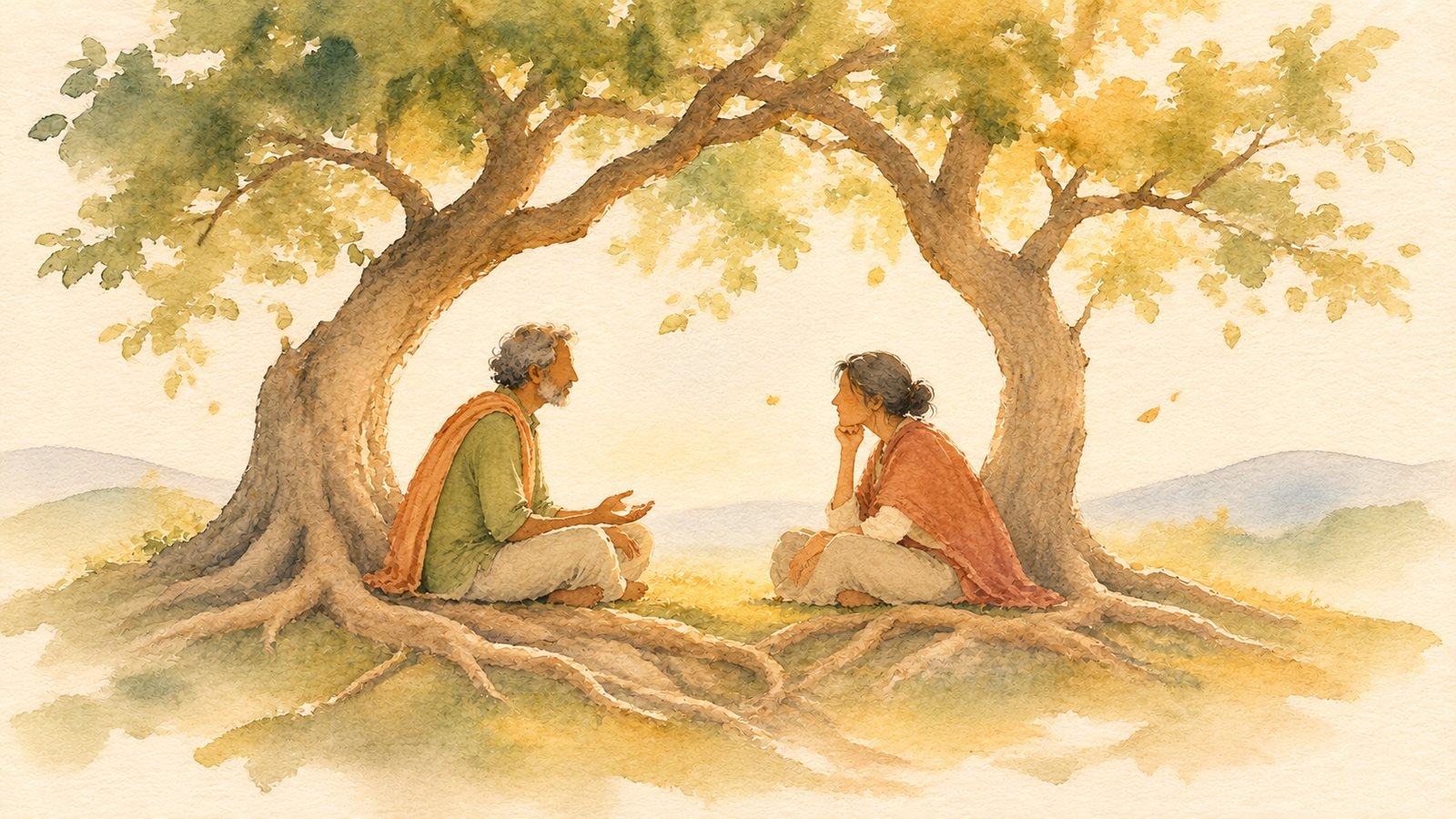
NVC, at its fullest, is a practice of remembering. Every interaction becomes an opportunity, not to win or to manage or to get through, but to remember that the person across from you is not fundamentally other. Their pain is intelligible to you because it is made of the same material as your own pain. Their longing is your longing, wearing different clothes.
Not passive, not a doormat
A necessary correction, because this teaching is so often misread. Ahimsa lived at this level is not passive. It is one of the most demanding and courageous forms of engagement available to us.
It requires that we keep our hearts open in situations that call for them to close. That we stay curious when we want to condemn. That we look for the need when we want to punish the behavior. It does not mean we stop having boundaries. We can say no, firmly, and protect what needs protecting. The question is whether the no carries a verdict of the other person’s badness, or simply the clear guarding of life. The hand can be firm. Ahimsa asks only that the heart not close.
And it will not always be possible. We are human beings, not enlightened masters. There will be days when the best we can manage is to notice, afterward, that we were violent in word or thought. Here is the beautiful thing: the noticing itself, when it comes with kindness rather than self-condemnation, is already the practice. It is already Ahimsa, turned inward.
The violence that leaks
Which brings me to the part of this teaching I most want NVC practitioners to hear.
Self-compassion is not a lesser application of Ahimsa. It is, in many ways, the most essential one. Because the violence we do to others is almost always an overflow of the violence we do to ourselves. The inner critic. The relentless standard-setting no one can meet. The way we speak to ourselves after a conversation goes badly. These are forms of inner violence, and they leak. They find their way into the tone of our voices, the speed with which we reach for blame, the quality of our judgments of others.
You cannot sustainably offer others a gentleness you refuse yourself. Practicing NVC as a spiritual path means turning the whole practice inward: meeting your own unmet needs with the compassion you would offer a friend, and speaking to yourself, in the privacy of your own mind, with the respect you would bring to the most cherished conversation of your life.
A small practice
If this speaks to you, here is something to try tomorrow morning, before the world’s demands arrive.
Sit quietly for a few minutes and set a single intention. Not a goal, not a to-do. An intention about how you want to move through the day. Perhaps: today I will try to see the need behind the behavior, in myself and in others. Or simply: today I will try to be kind, in every interaction, without exception. Hold it in your body, not just your mind.
At the end of the day, return to it. Not to grade yourself. An NVC practitioner does not need another opportunity for self-judgment. Simply notice: what happened when the intention was present? What happened when it was forgotten?
This is how the path is walked. Not in grand gestures but in the daily returning. In the willingness to begin again, every morning, without drama. The word at the front of our practice is not a label. It is the destination and the ground: the slow remembering that the same life that moves in you is moving in everyone you will meet today.
Every conversation is sacred ground.